Nigeria’s National Economic Council (NEC) has endorsed a 90-day economic action plan proposed by the Federal Ministry of Finance to lower living costs and improve food affordability.
The plan also aims to attract investment, remove barriers to economic activity and accelerate the completion of projects expected to deliver direct benefits to Nigerians.
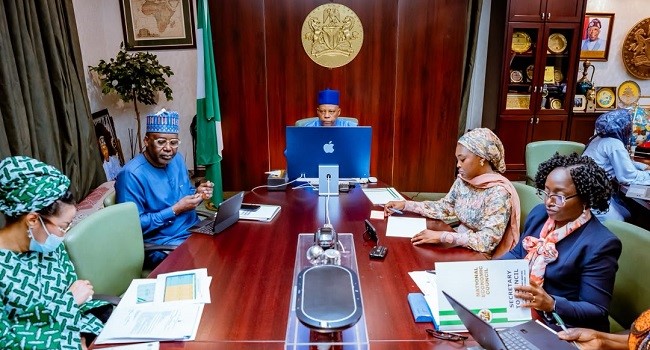
According to a statement by Stanley Nkwocha, Senior Special Assistant to the President on Media and Communications in the Office of the Vice President, the endorsement followed a presentation by Finance Minister and Coordinating Minister of the Economy Taiwo Oyedele at NEC’s 161st meeting on Thursday. The virtual meeting was chaired by Vice President Kashim Shettima.
The plan identifies five priority areas: food affordability, tax harmonisation, completion of high-impact projects, removal of investment bottlenecks and regulated household support.
NEC also approved the establishment of a national dashboard to track ongoing projects across the country, with an emphasis on transparency, accountability and accurate reporting on the use of proceeds from fuel subsidy removal.
According to the National Bureau of Statistics (NBS), Nigeria’s headline inflation rate fell to 14.63% in September 2026, down from 15.39% in August. However, food inflation remained high at 19.59% year-on-year, underscoring the continued pressure on household budgets.
The 90-day plan is intended to help translate improvements in the wider economy into tangible benefits for households and businesses. Its impact will depend on how effectively the proposed measures are implemented, particularly those aimed at improving food affordability, attracting investment and easing economic bottlenecks.