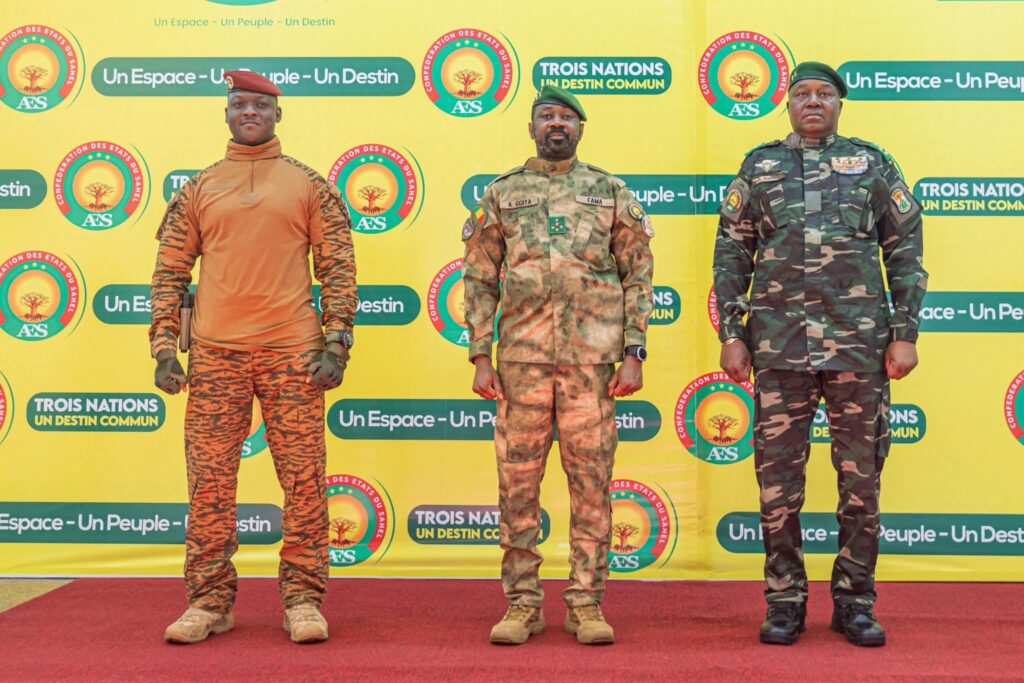
The Malian government has examined the consensus roadmap for the second year of the Confederation of Sahel States (AES), just days after ratifying several key protocols of the regional bloc.
Meeting at the Prime Minister’s Office under the steering committee of the national AES committee, officials outlined priorities aimed at strengthening first-year achievements and coordinating joint initiatives between Mali, Burkina Faso, and Niger.
The strategic framework centers on three core pillars: defense and security cooperation, diplomatic alignment, and development planning. Earlier, on February 13, 2026, Mali’s Council of Ministers approved legislation authorizing the ratification of four additional protocols covering defense, diplomacy, development, and parliamentary coordination—texts initially endorsed at the bloc’s second ordinary summit in Bamako in December 2025.
Following that summit, the rotating presidency of the Confederation was handed to Ibrahim Traore, President of Burkina Faso, succeeding Mali’s leader Assimi Goita, who held the inaugural term.
The AES, born from the Alliance of Sahel States established in 2023, continues to consolidate its institutional framework after the signing of its founding treaty in Niamey in July 2024 and the joint withdrawal of the three member states from ECOWAS in January 2025.
Authorities say the Year II roadmap will translate recent legal commitments into concrete actions, particularly in areas of security, regional mobility, infrastructure development, and economic resilience, amid ongoing regional challenges.