The Senegalese government is investing more than FCFA 220 billion to modernise the country’s electricity transmission network through the commissioning of several strategic infrastructures operated by the National Electricity Company of Senegal (Senelec), under the Senegal Power Compact.
The development was unveiled during a press visit organised by Millennium Challenge Account–Senegal II (MCA-Senegal II) in collaboration with Senelec. The visit covered newly commissioned facilities in Diass, Hann, Kounoune, and the Léopold Sédar Senghor Airport in Yoff.
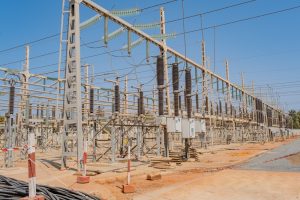
Funded with the support of the American people through the Millennium Challenge Corporation (MCC), the project aims to sustainably strengthen the capacity, reliability and resilience of Senegal’s national interconnected electricity network.
“The substations visited are already operational. Beyond increasing network capacity, they introduce advanced technologies and expertise that will benefit the entire electricity sector,” said MCA-Senegal Director General, Oumar Diop.

The new infrastructure includes high-power transformers, 30 kV switchgear, 225 kV substations, as well as underground transmission lines designed to boost transmission capacity and improve grid stability.
At the Hann substation, one of the most critical nodes in the network, investments of more than FCFA 4.7 billion enabled the installation of an 80 MVA transformer, a new medium-voltage building, and a 30 kV switchgear with 21 cells, significantly increasing electricity supply to densely populated areas of Dakar and its suburbs.
In Diass, which supplies the Blaise Diagne International Airport and nearby industrial zones, the replacement of old 40 MVA transformers with two 80 MVA units, along with a 20 Mvar reactor bay, has doubled the station’s capacity and improved power supply security.

At the LSS Yoff Airport station, an investment of over FCFA 3.7 billion has also doubled transmission capacity, directly benefiting Dakar and surrounding areas that account for nearly 60 percent of national electricity demand.
Electricity Technical Adviser at the Ministry of Energy, Petroleum and Mines, Makhtar Ndiaye, said the project aligns with Senegal’s long-term energy strategy.
“The transmission network is a vital link in delivering stable, reliable and quality electricity. These works will reduce congestion and support growing energy demand,” he said, noting that the project supports Senegal’s goal of universal electricity access by 2029 and its gas-to-power strategy.
Diop described the project as the construction of an “electricity highway,” adding that the new 225 kV lines, underground and submarine cables, and substations are designed to support Senegal’s energy ambitions up to 2050 and significantly reduce power outages.
According to MCA-Senegal II, about 4.6 million households and businesses are expected to benefit from the transmission project.
Authorities say implementation is progressing well, with nearly 95 percent of physical works completed and about FCFA 180 billion already disbursed. Full completion is expected within the next seven to eight months, ahead of the Compact’s closing date.
The project, largely executed by Senegalese engineers and technicians, complies with international technical, environmental and safety standards.
Through these investments, the government says it is reinforcing electricity as a key driver of economic growth, industrialisation and improved living standards.